Correlated · HealthTech · AR / AI Design

Abstract clinical vision to developer-ready AR prototype. 49 hours.

Zero-revision handoff documentation. Founder pivoted from B2C to B2B, targeting clinics and hospitals.

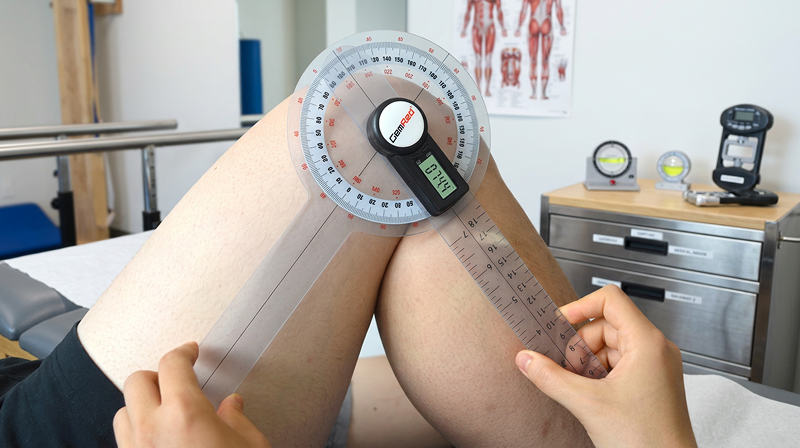
The goniometer entered clinical physiotherapy practice in the early twentieth century. It measures one angle at a time. It requires manual positioning, manual reading, and manual recording. The basic instrument design has not materially changed since.

The consequences for clinical practice are structural. Therapy progress is documented through manual notes, producing records that are incomplete by design. Practitioners assess each session in isolation, without a longitudinal view of patient movement across a treatment cycle. The measurement is slow, the documentation is approximate, and the clinical picture it produces is partial.
The founder came to this engagement as a physiotherapy patient, not a clinician. His domain knowledge was firsthand. Session after session measured with a goniometer, results recorded by hand, no accumulated picture of his own progress. He had no technical background and no concrete vision for how to translate that understanding into a product.

The ambition: an AI-powered AR application replacing manual goniometer measurement. Real-time joint tracking. Multiple angles calculated simultaneously.

Sole designer. End-to-end product definition and interaction design, from translating the founder's clinical understanding into a technical brief through to a handoff package a development team could build from without further clarification.

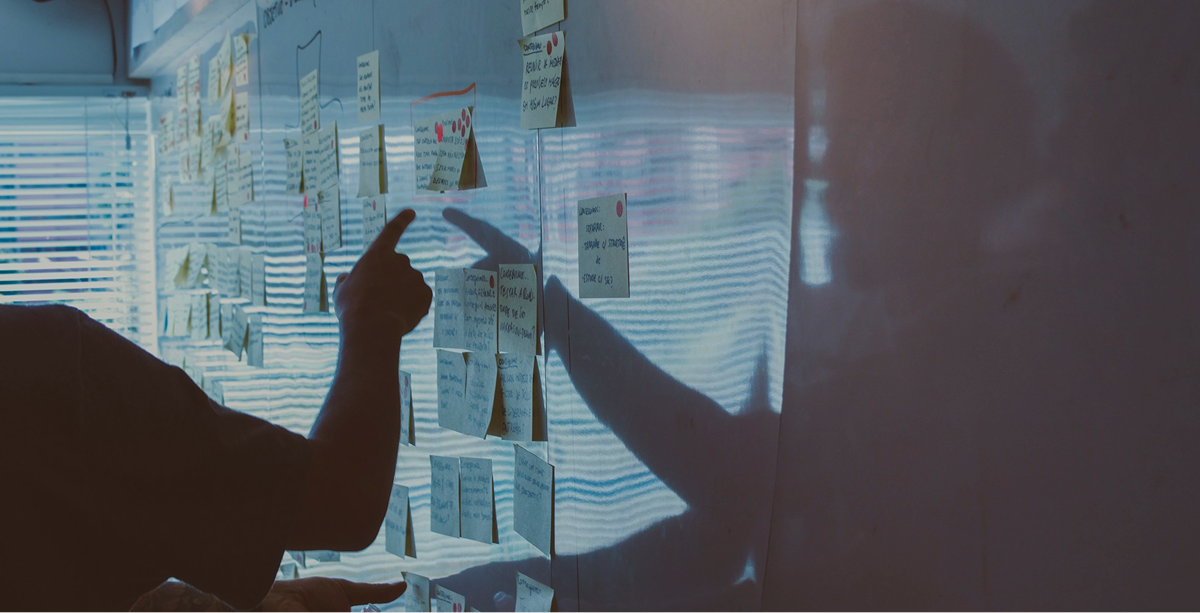
12+ concept approaches were developed and discarded across four days.

No AR prototyping tools were available within the time and budget of this engagement. No time for developer meetings. No room for iteration after handoff.

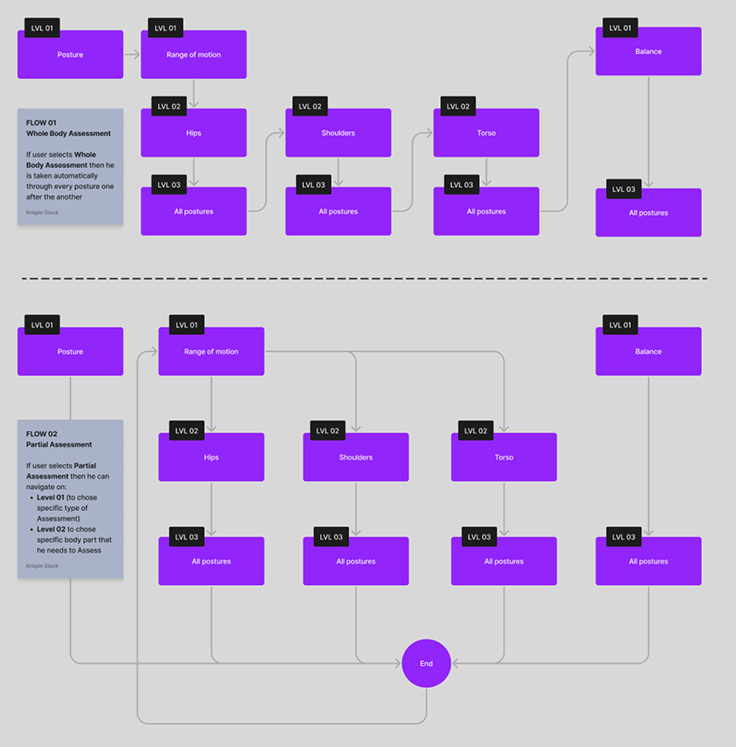
AI joint tracking was mapped through reference material. Conceptual sketches of AR space were produced to establish technical boundaries. Two user flows were defined: Whole Body Assessment and Partial Assessment. The information hierarchy was resolved.

Documenting AR interactions through conventional means was not viable under these conditions. A different approach was needed.

The solution was a structured annotation system built on conditional, scenario-based logic. Interactions, states, and edge cases specified in writing, without simulating a literal AR touchpoint. The methodology was borrowed from board game rulebooks: rules written so precisely that anyone picking them up can execute without ambiguity or clarification.

If A, do 1.
If B, do 2.
If C, do 1+2, but never do 3.

The documentation system this produced covered Point, Vertex, and Diamond interaction types across passive, active, selected, and second-angle states. Four colour-coded angle systems. A complete icon and toolbar library. All produced within the sprint. The handoff required zero revisions.

The Rulebook produced a working application. AI-generated joint-tracking overlaid on real camera footage. Angle measurement in real time across multiple joints simultaneously. Four capabilities shipped.

Basic Measurement: the user tap-selects a Vertex and two Handles from AI-generated AR Points to create and measure any angle. A single additional interaction produces the Reverse Angle.

Incremental Measurement: augmented vertical, horizontal, and 45-degree vectors added to AI-generated joint Points, enabling flexibility measurement in correlation with predefined reference lines.

Multiple Angles: up to four angles measured concurrently, each colour-coded, enabling correlation assessment across multiple joints and extremities simultaneously.

Alignment, Adding Lines and Grid Lines: AR Lines and Grids measuring joint alignment independently of point-based measurement, with front view selection and gridline density controls.

Manual measurement: one angle per reading. The application measures multiple joints simultaneously.

Abstract clinical vision to pixel-perfect, developer-ready MVP. 49 hours. Zero-revision handoff.

The founder had targeted consumers. The product's capabilities placed it in a professional clinical context. He pivoted to clinics and hospitals.

The product launched on the App Store.

49 hours. Zero revisions. A product that revealed its own market.