VitalNetwork · EdTech · Discovery & Platform Design
214 schools. 11,630 educator voices elevated.
235,580 students impacted.
K-12 education. The highest worker burnout rate of any US industry. 44% of workers in K-12 education reported feeling burned out, always or very often.1
Administrators were drowning in data but starving for actionable insights. Buried under fragmented reports and unstructured complaints. Overwhelmed, and lacking the tools and frameworks to respond.
Educator feedback existed in paper surveys. No system existed to transform it into actionable guidance.
Demoralised teachers. Disengaged students. Crumbling communities.
Nathan Eklund had spent decades working with school systems across the country and saw the same gap repeatedly: schools craved better data, frameworks, and supports. He launched Vital Network to close it. Dr. Erin Lynn Raab joined as Chief Strategy and Impact Officer to lead the systemic approach.

Nathan Eklund, M.Ed
Founder and CEO

Dr. Erin Lynn Raab
Chief Strategy and Impact Officer
The platform brief: go beyond surveys and statistical reports. Build a virtual guide with actionable plans to support broader transformation across school districts. 0-to-1. No prior system to extend.
Two-phase engagement: intensive two-week Discovery, followed by MVP execution. Design Lead role. Six deliverable types: expert interviews and requirement collection, proto personas, user journeys and flows and IA, rapid prototyping and iterations, modular design system and UI handoff to development, documentation for post-MVP phases.
The platform served three structurally different user types from one system: Vital Coach, District Leader, and School Leader, each with different content hierarchy needs.
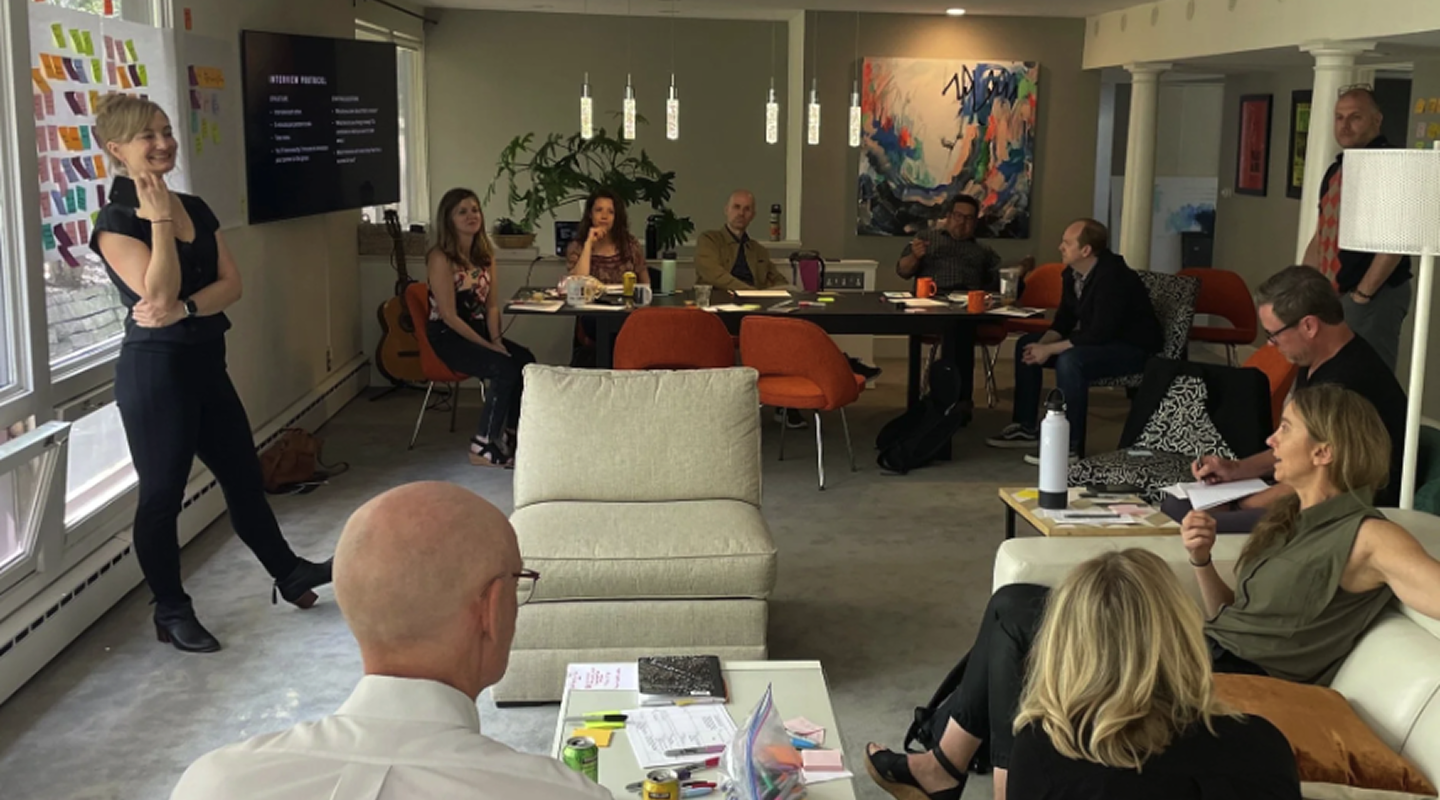
Discovery ran for two weeks. Expert interviews across all three user types: Vital Coaches at superintendent level, District Leaders, and School Leaders. Interview synthesis, documented across four FigJam boards, mapped concerns, goals, frustrations, and needs per role.
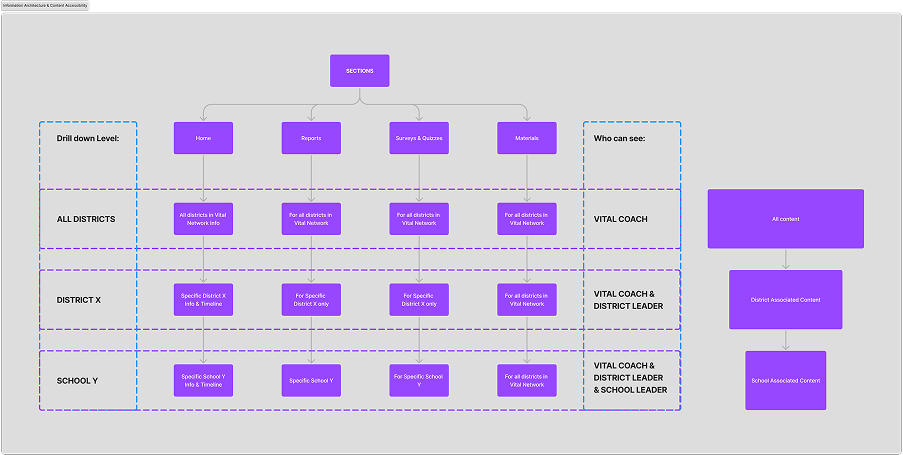
Three user levels required three distinct content hierarchies within one system. Vital Coach sees all districts. District Leader sees their district and all-districts content. School Leader sees their school, their district, and all-districts content.
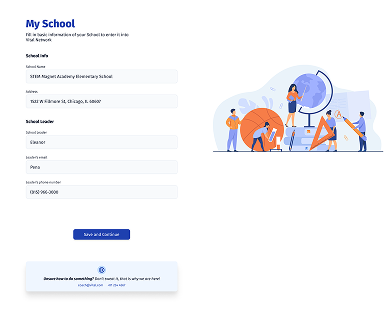
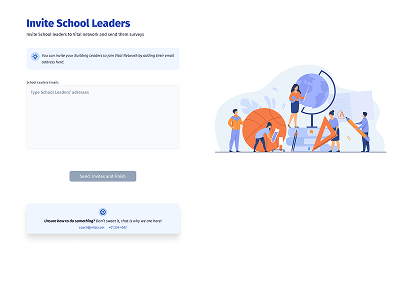
Two onboarding flows, one per role, each matched to a structurally different entry point and set of responsibilities. User journeys mapped per role from email credential receipt through to workspace operation.
Additional expert interviews were conducted with three educators whose experience spanned teacher, principal, district leader, and superintendent level. All were working in isolation. The most significant barriers were not what any one of them could see individually, but what they were not sharing with each other.
That finding redefined the scope. The platform needed to carry the synthesis of what those educators knew, not only collect responses from the schools they served.

Dr. Lori Wilcox

Nancy Vague

Brad Swanson
The platform brief: go beyond surveys and statistical reports. Build a virtual guide with actionable plans to support broader transformation across school districts. 0-to-1. No prior system to extend.
Two-phase engagement: intensive two-week Discovery, followed by MVP execution. Design Lead role. Six deliverable types: expert interviews and requirement collection, proto personas, user journeys and flows and IA, rapid prototyping and iterations, modular design system and UI handoff to development, documentation for post-MVP phases.
The platform served three structurally different user types from one system: Vital Coach, District Leader, and School Leader, each with different content hierarchy needs.
The most significant barriers were not what any one of them could see individually, but what they were not sharing with each other.
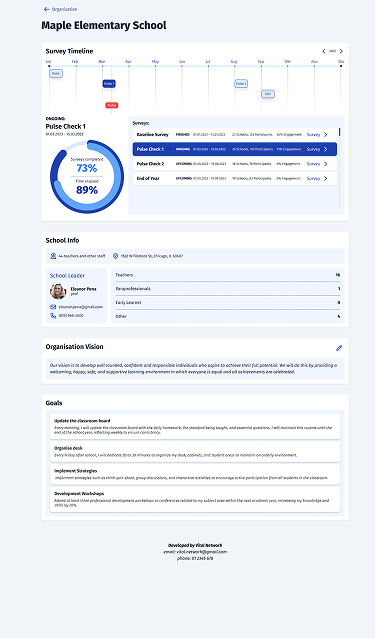
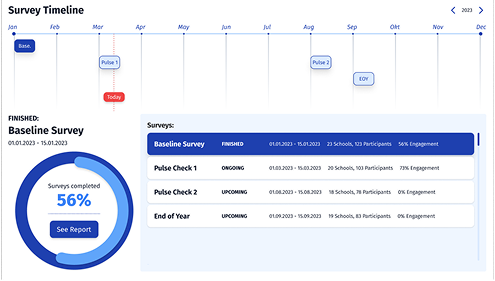
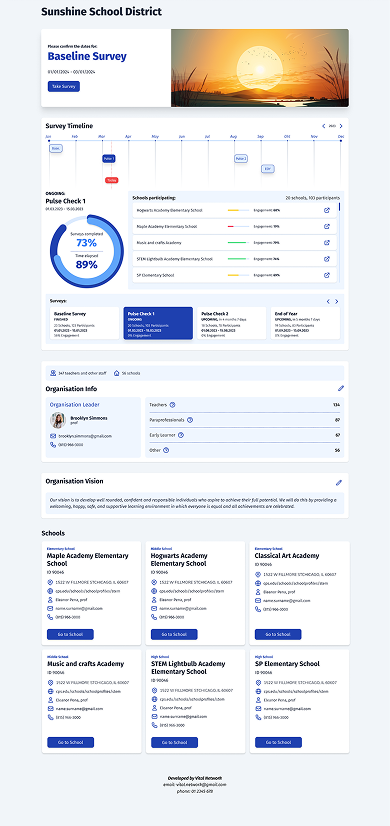
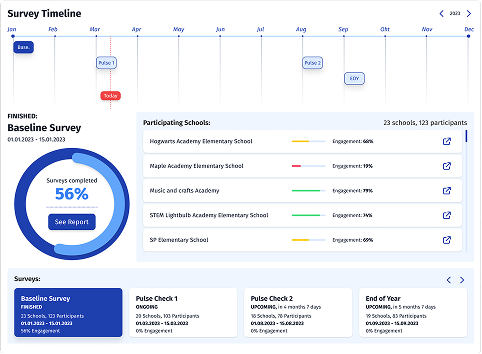
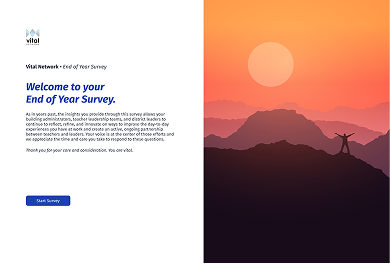
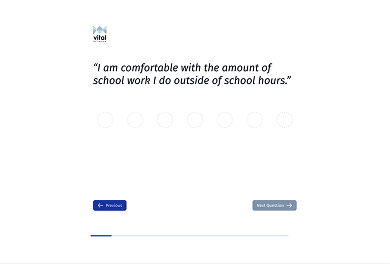
The survey moved from paper to a branded, question-by-question digital experience, each item presented individually with Likert interaction. Each survey taker received a unique tracking link, enabling historical comparison across an annual cycle of four surveys.
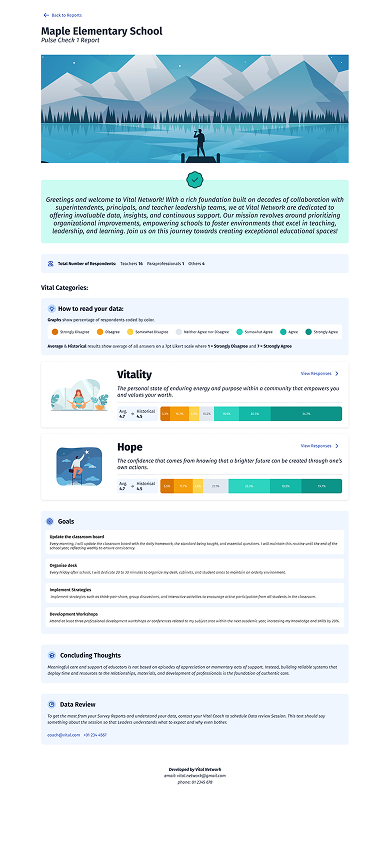
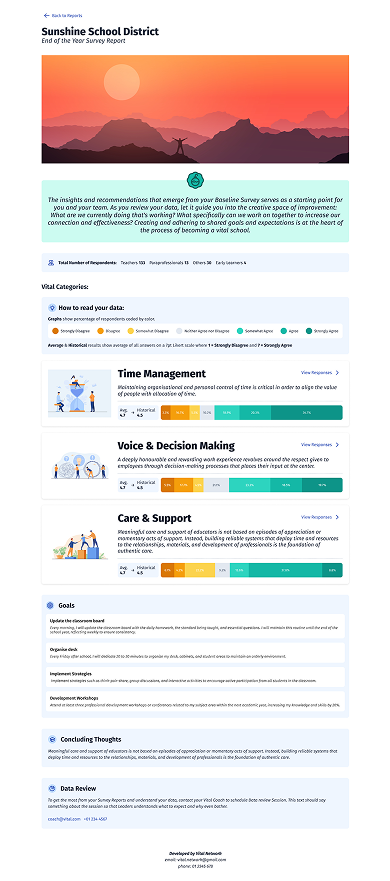
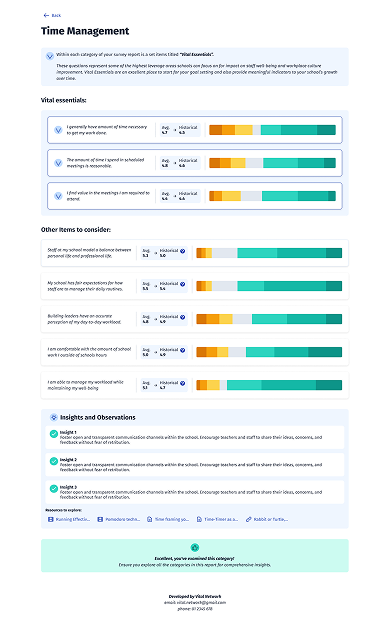
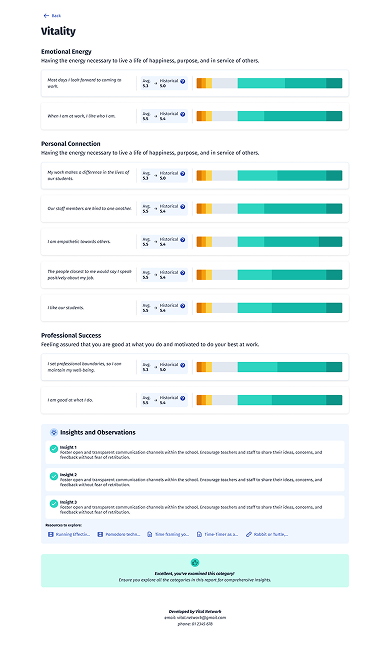
Reports structured data across five categories: Vitality, Time Management, Voice and Decision Making, Care and Support, Goals. Each showed current average score against historical average, with full Likert distribution.
Onboarding was built as two separate flows, one per role. The Building Level Workspace gave school leaders predefined goal selection, milestone tracking, survey deployment controls, a video messaging system to invite leadership teams, and teacher count management per building. A Report Builder generated custom reports aggregated to district level, with building-by-building breakdown and export.
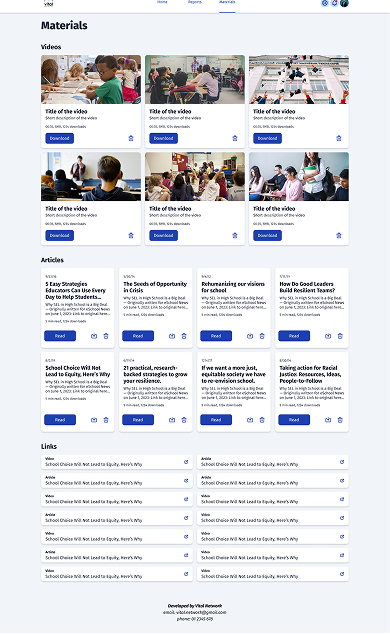
Videos, Articles, and Links were accessible alongside data and reports within the same system. The design system was modular, documented for post-MVP phases, and built for development handoff.


11,630
Educator voices elevated
214
Schools supported
235,580
Students impacted
"Vital Network helped us get purposeful and real. I was really encouraged by the process. The data, support, tools, and protocols have helped accelerate our work and bring more alignment."
Discovery made visible what had not been visible before: the field's leading practitioners were working in isolation, and the data they were generating was producing no action. The platform gave districts a system to close both gaps.
The field's most significant barriers were invisible until discovery made them legible. The platform turned that legibility into action.